





















THE CONVERSATION INTELLIGENCE LAYER
No rip-and-replace. No IT lift.

See evidence on your own conversations — calls, email, chats and any transcribed interaction — before you commit to anything.




Your CCaaS, CRM, Email, video conferencing, VoIP unchanged













Today, your customer's story lives in fragments. QA scorecards, CRM notes, support tickets, and the memory of whoever was on the call.
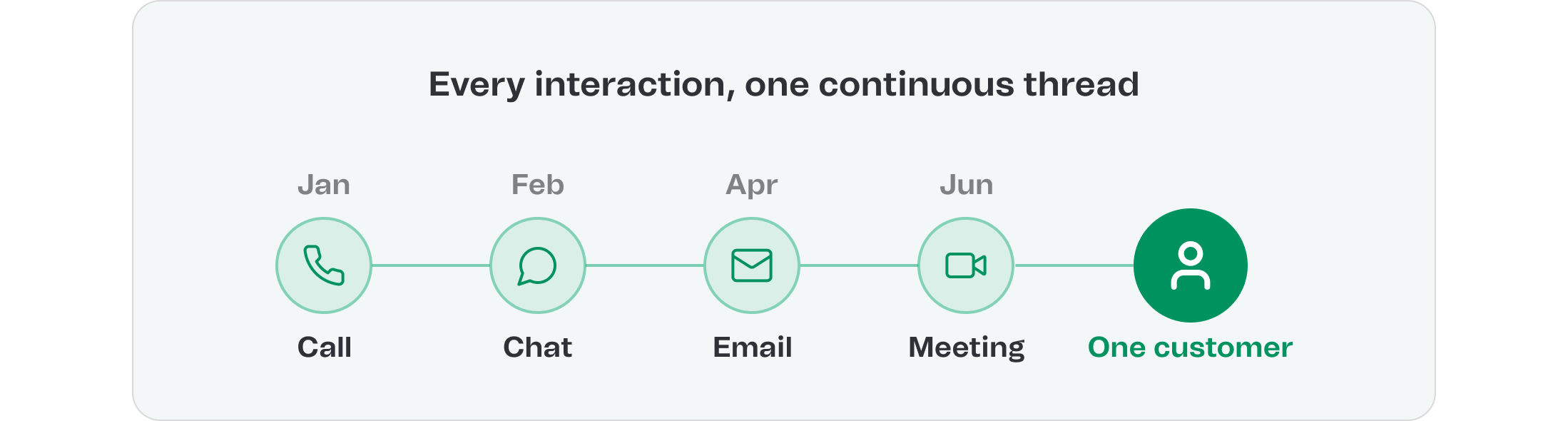
Compass weaves it all into one continuous view per customer. That single thread is what powers every solution.
The objection three months ago. The pricing promise your AE made. The escalation that never closed. Single-interaction tools miss all of it. The thread doesn't.
A complaint on a call Monday, a ticket Tuesday, an email Wednesday. Most tools score each separately with different rubrics. Compass doesn't. A pattern spotted anywhere counts everywhere.
QA, coaching, compliance, CS, sales all working from the same thread. No more reconciling five versions of what happened in an email chain or a meeting.

Not interpretations. Factual observations grounded in real conversations, with quotes and timestamps.

Tracking quality, compliance, customer intent, sales performance, and more, each with a strength score.

Hard interactions handled well aren't penalized. Easy ones handled poorly aren't rewarded.

Vs. the 1–3% most QA programs sample. Patterns hidden in small samples become visible when you can see everything.
 Ask Compass
 History


How are my new reps performing compared to the team average?
Which reps are struggling this week?

Hello! I'm here to assist you. How can I help you today?
Was every required disclosure made on collections calls this week?
What's costing us the most money right now, and who owns fixing it?
ChordiaYour team runs conversations through people and AI agents alike. Compass doesn't care which. It looks at what was said, what it means, and what should happen next. The same way, every time. When an AI agent misses something, you'll see it. When a human handles a hard situation well, you'll know that too.


Every interaction scored with evidence tied to real moments. Something went wrong? You'll know exactly where.

Where is the AI creating friction? Missing intent? Falling below the bar you've set for humans? Compass tells you.


Up from 6th in just 30 days
At pilot location. Same staff. Same product inventory.
On Compass after pilot results
On a new product line in under 10 months
Zero watched manually
To surface patterns across hundreds of conversations


Start with a small set of calls. No commitment until you're ready.
See how the pilot works


