



















Coaching

Conversation Coaching

Know exactly where to coach, what to coach on, and why it matters, with evidence from every conversation.

Coaching is a core capability of Compass, Chordia's evaluation engine. It connects quality measurement to team improvement by surfacing specific, evidence-backed coaching opportunities from every interaction.

The Problem

Most coaching is based on gut feel, not evidence

Supervisors know their team needs coaching. The problem is knowing where to focus.

When you're reviewing a handful of conversations out of hundreds, the coaching you give is shaped by whatever you happened to hear. The rep who had a bad call on a day you were listening gets coached. The rep who's been quietly struggling for weeks doesn't.

Without consistent visibility, coaching becomes reactive and uneven. Good habits go unrecognized. Bad habits go uncorrected. And the people doing the coaching burn time on manual review instead of actually coaching.

The Solution

How It Works

Instead of building coaching plans from a few overheard conversations, Compass surfaces specific coaching opportunities from every interaction, backed by evidence your team can validate.

Surface what matters automatically

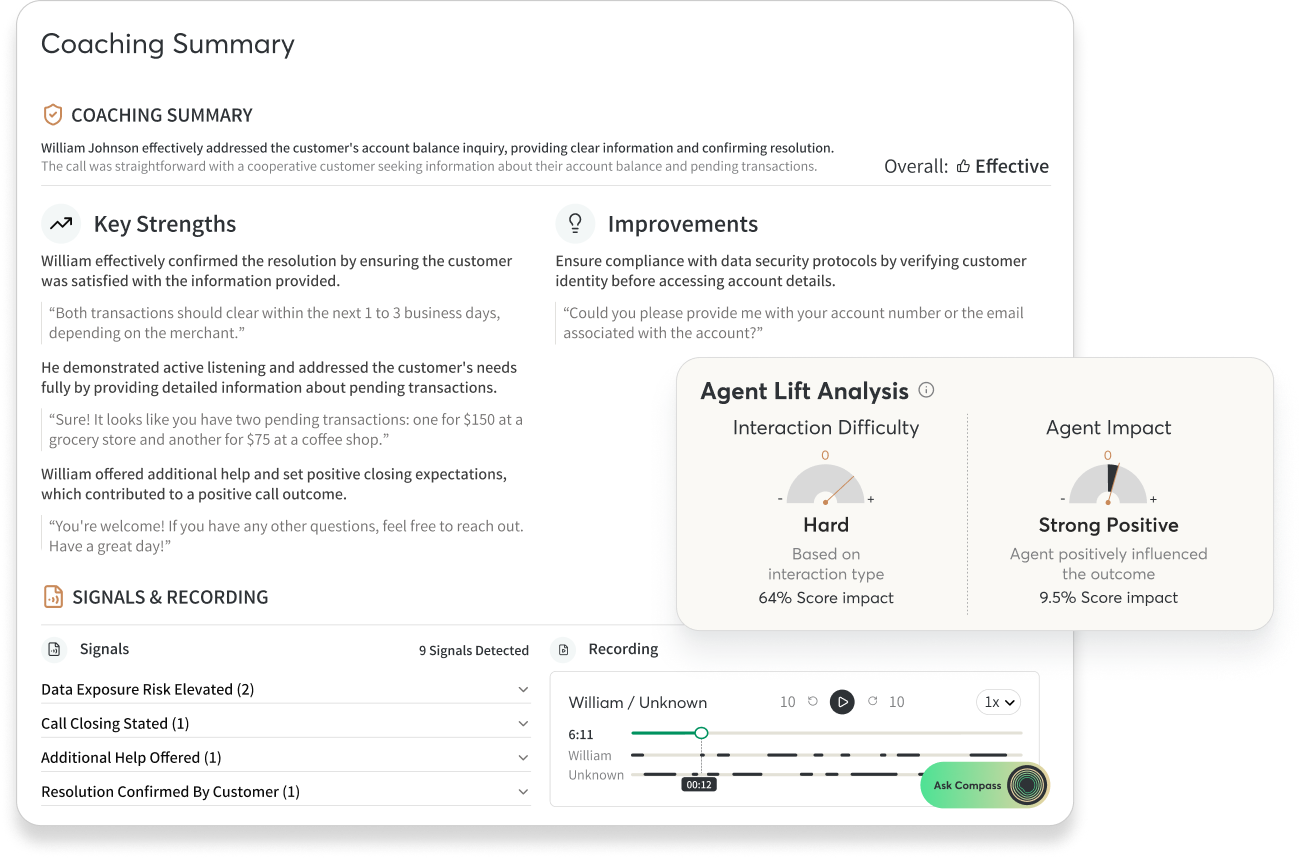
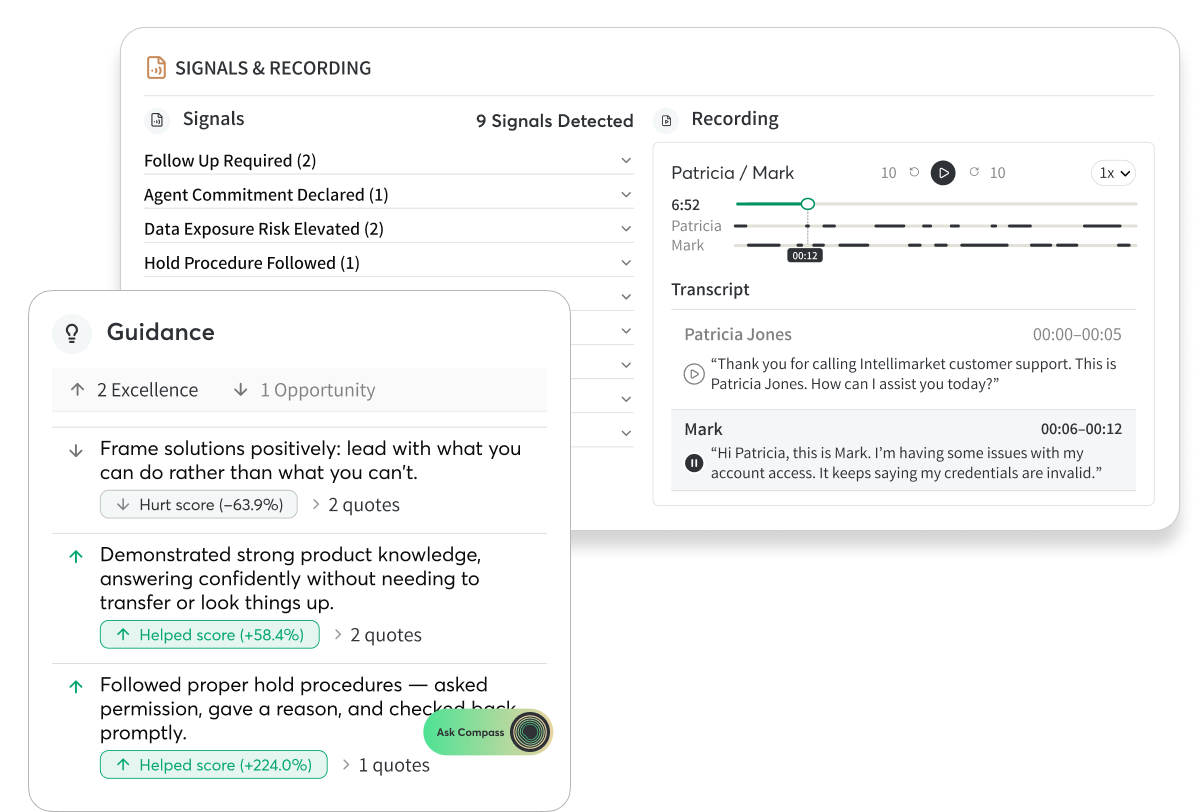
Compass evaluates every conversation and identifies coaching opportunities and areas of excellence. Each one is tied to specific moments in the conversation, not abstract scores.

The Guidance System produces two types of findings: opportunities (where a rep can improve) and excellence (where a rep performed well). Both matter for coaching.

Measure what each person contributes

Agent Lift measures how individual behaviors drive positive outcomes beyond what the situation alone would predict. It separates what the agent did from the difficulty of the conversation.

That means coaching can focus on behaviors that actually move results, not just surface-level metrics like handle time or script adherence.

Make coaching conversations easier

Every coaching recommendation comes with quotes, timestamps, and context from the conversation itself. Supervisors don't need to re-listen or build the case from memory.

When reps can see the evidence, coaching conversations shift from "I think you could improve" to "here's exactly what happened and what to try next time."

Manual coaching vs. evidence-based coaching

Traditional Approach

Coaching is based on a small number of overheard or reviewed conversations. Supervisors pick what to coach on based on what they happened to catch.

Feedback is inconsistent across the team, arrives late, and is hard to make specific. Good performance often goes unrecognized.

• Based on small samples
• Inconsistent across the team
• Hard to make specific

Chordia Approach

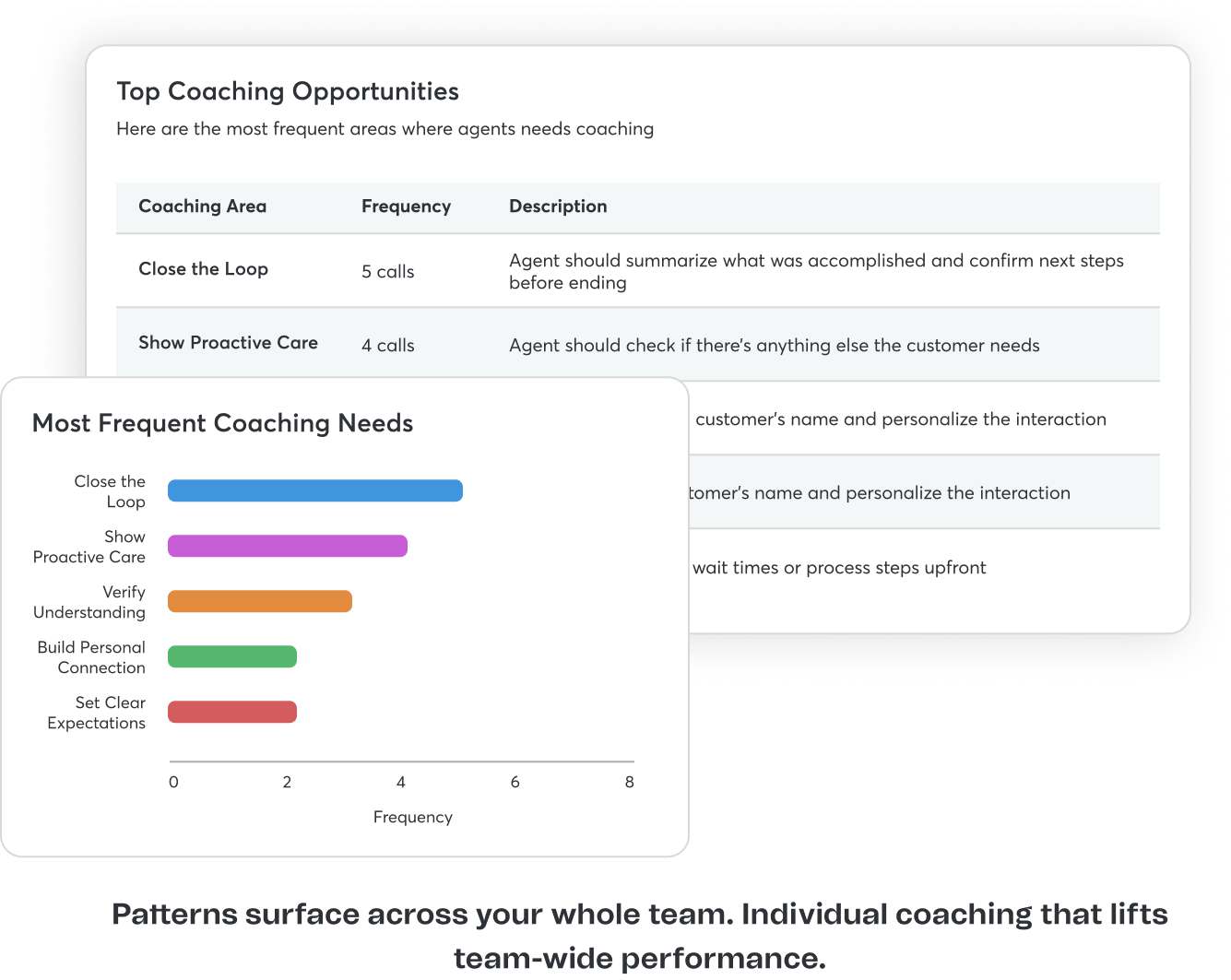
Coaching priorities are surfaced from every conversation, not just the ones a supervisor happened to review.

Each recommendation is grounded in evidence, so feedback is specific, timely, and consistent. Excellence is recognized alongside areas for improvement.

• Every conversation contributes
• Evidence-backed recommendations
• Strengths recognized, not just gaps

Your team gets better when coaching is specific, consistent, and grounded in evidence

Compass identifies coaching opportunities and areas of excellence across every interaction, so supervisors can focus on the conversations that matter most.

Other solutions on the Chordia platform

See how evidence-based coaching works in practice

If you want to see how coaching priorities surface from real conversations, and how teams use them to improve performance without adding review time, we can walk through it with real examples.